

Table of Contents
- What Makes High-Quality Screen Printing
- Step 1: Examine Ink Opacity and Coverage
- Step 2: Check Print Registration and Alignment
- Step 3: Feel the Hand and Ink Deposit
- Step 4: Inspect for Common Printing Defects
- Signs of Bad Screen Printing to Avoid
- How to Wash Screen Printed Shirts for Lasting Color
- Testing Print Durability Before and After Washing
- Frequently Asked Questions
Last Updated: September 27, 2026
What Makes High-Quality Screen Printing
High-quality screen printing combines technical precision with material excellence. The difference between a print that lasts years and one that fades after a few washes comes down to ink opacity, registration accuracy, and proper curing. Spot quality screen printing before you buy is the smartest way to invest in apparel that actually holds up to real life.
Quality prints start with the fundamentals: vibrant, consistent ink coverage that doesn't crack or peel. The best screen-printed garments feel soft to the touch while maintaining bold, saturated colors. Registration, the alignment of multiple colors, must be sharp and precise. When these elements work together, you get a print that survives dozens of washes and still looks like it did on day one.
The most common mistake buyers make is judging prints only by how they look fresh off the rack. A print can look stunning in the store but fail dramatically after the first wash. That's why knowing what to inspect matters so much.
Step 1: Examine Ink Opacity and Coverage
Ink opacity refers to how solid and opaque the color appears on the fabric. High-quality prints have full coverage with no see-through spots or thin areas. Hold the garment up to light and look for consistency across the entire design.
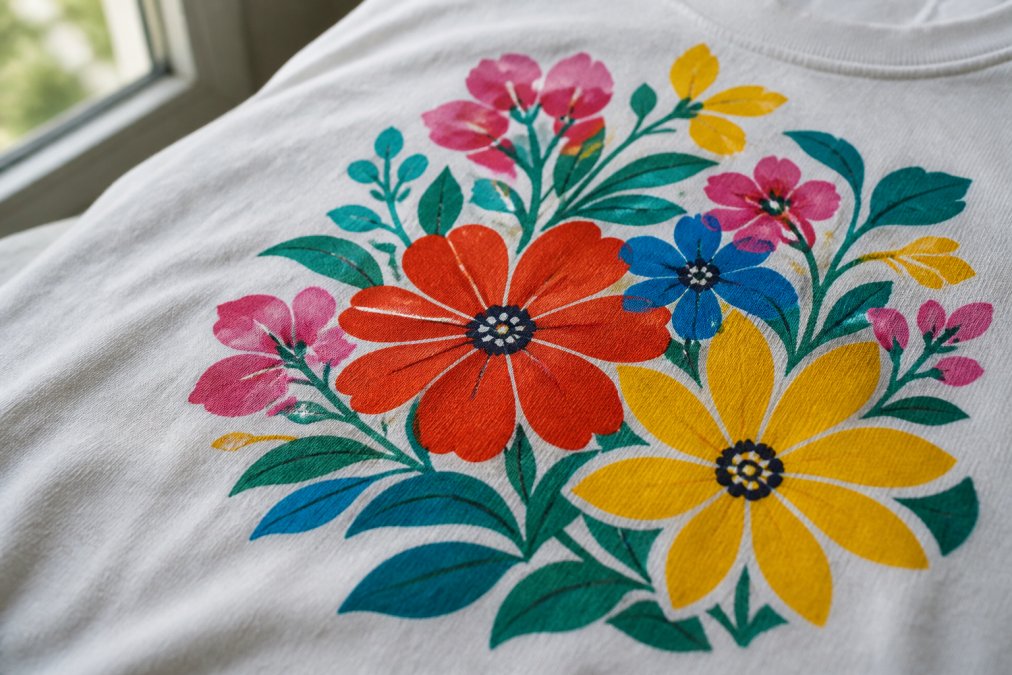
Opacity depends on three factors: pigment concentration in the ink, ink deposit weight (measured in microns), and how well the ink bonds to the fabric fibers.
Feel the print with your fingertips. Spot quality screen printing by checking for noticeable ink deposit without feeling stiff or plasticky. The fabric should still have some give beneath the print. If the shirt feels like cardboard where the print is, the ink deposit is too heavy, a sign of either poor technique or an attempt to mask thin pigmentation with excessive ink volume.
Check for these signs of strong opacity:
- Colors appear vivid and uniform across the entire design with no gradient fading
- No see-through spots, pinholes, or lighter areas within solid color regions
- The ink sits firmly on the fabric without flaking at edges or corners
- Underbase (the white layer beneath colored inks on dark fabrics) is fully opaque and doesn't show the base fabric color through it
- The print maintains consistent color density when viewed from different angles
Poor opacity often signals inadequate curing. If ink isn't fully cured during the heat-setting process, pigments remain loosely bound to fibers and appear dull or washed out.
When inspecting opacity, also check the underside of the garment. If ink has bled through to the back, it suggests either excessive ink deposit or poor mesh selection. A quality print should show minimal ink transfer to the reverse side, only a slight shadow, not a full duplicate image.
Step 2: Check Print Registration and Alignment
Registration is the precise alignment of multiple ink colors in a single design. When registration is off, colors don't line up correctly and the print looks blurry or misaligned. This is one of the easiest quality markers to spot.
Look at any area where two colors meet. The line between them should be sharp and clean, with no color bleeding into the other. If colors overlap slightly or show gaps between them, registration is poor. Multi-color designs are the best way to test this because misalignment becomes obvious.
Examine these registration details:
- Color boundaries are crisp and defined
- No visible overlap or gaps between colors
- Fine details remain sharp, not fuzzy or doubled
- The entire print sits straight on the garment, not tilted
Poor registration happens when screens aren't positioned correctly during printing. It's a sign of rushed production or inexperienced operators. Quality manufacturers invest in precise equipment and skilled technicians to maintain tight registration.
Step 3: Feel the Hand and Ink Deposit
The "hand" of a print describes how it feels to touch. Soft hand means the fabric retains its natural feel even with the print applied. Heavy hand means the print feels stiff or plasticky.
Quality screen printing balances visible ink deposit with wearability. You should feel the ink when you touch it, but the shirt shouldn't feel like wearing a board. The best prints feel like a natural part of the garment, not a coating on top of it.
Test the hand by:
- Running your fingers across the print and surrounding fabric
- Bending the shirt to see if the print cracks or stays flexible
- Checking if the print feels uniform or has thick and thin spots
- Comparing the printed area to unprinted fabric
Step 4: Inspect for Common Printing Defects
Common printing defects reveal quality control issues. Even small defects suggest the manufacturer didn't inspect prints before shipping.
Watch for these red flags:
- Cracking: Fine lines appearing in the print, especially at fold points
- Peeling: Ink lifting away from fabric edges or corners
- Fading: Uneven color or washed-out areas in the design
- Bleeding: Ink colors running into each other at boundaries
- Pinholes: Tiny holes or thin spots in solid color areas
- Ink spots: Random specks of ink outside the intended design
Each defect points to a different problem. Cracking happens when ink isn't flexible enough or the garment is stretched too tight during printing. Peeling indicates poor ink adhesion or low-quality fabric. Bleeding suggests incorrect screen mesh count or squeegee pressure.
Quality manufacturers catch and reject prints with defects before they reach customers. If you see multiple defects on a single garment, the entire production run likely has quality issues.
Signs of Bad Screen Printing to Avoid
Bad screen printing shows itself through several consistent markers. Learning to spot these signs saves you from buying disappointing products.
Red flags that indicate poor quality:
- Dull, faded colors that look washed out even when new
- Stiff, plastic-feeling prints that crack when bent
- Blurry or misaligned colors in multi-color designs
- Visible defects like pinholes, peeling edges, or ink spots
- Ink that flakes off when scratched with a fingernail
- Uneven coverage with thin and thick areas in the same design
- Prints that feel sticky or tacky to the touch
- Strong chemical smell from the garment
These signs indicate shortcuts in the printing process. Low-quality manufacturers use cheap inks, skip proper curing, or rush production without quality control. The result is prints that fail quickly and disappoint customers.
The most common complaint from buyers is prints that fade or crack after just a few washes. This happens because of poor ink quality, inadequate curing, or both. Quality manufacturers use premium inks and proper heat curing to ensure longevity.
How to Wash Screen Printed Shirts for Lasting Color
Proper washing extends the life of screen-printed apparel significantly. Even high-quality prints need care to maintain their vibrant appearance over time.
Follow these washing guidelines:
- Turn shirts inside out before washing to protect the print
- Use cold water instead of hot water
- Wash with similar colors to prevent dye transfer
- Use mild detergent without bleach or harsh chemicals
- Avoid fabric softener, which can damage ink adhesion
- Wash on gentle cycle rather than heavy duty
- Air dry instead of using high heat in the dryer
- Never dry clean screen-printed garments
Heat and agitation are the main enemies of screen-printed designs. Cold water and gentle handling preserve both the ink and the fabric. Turning shirts inside out creates a physical barrier that protects the print from friction and detergent.
Drying is just as important as washing. Machine dryers apply intense heat that can cause cracking and fading. Air drying takes longer but preserves the print far better. If you must use a dryer, use the lowest heat setting or air-dry cycle.
Testing Print Durability Before and After Washing
The real test of quality comes after washing. A print that looks great new but fades after a few washes isn't truly high-quality. Rather than relying on guesswork, use a standardized stress-test protocol to evaluate print durability before committing to bulk purchases.
The Home Durability Stress Test
Before buying multiple items, purchase a single test garment and run it through this structured evaluation:
Baseline Assessment (Day 1):
- Photograph the print under consistent lighting (natural daylight from the same window, same time of day)
- Document color vibrancy by comparing it to an unprinted section of the same shirt
- Feel the print texture and note its flexibility by gently bending the garment
- Measure ink adhesion by rubbing the print firmly with a white cotton cloth for 10 seconds; any visible color transfer indicates weak bonding
- Check for existing defects: pinholes, peeling edges, bleeding, or uneven coverage
Wash Cycle 1 (After First Wash):
- Wash the garment inside-out in cold water (60°F or below) on gentle cycle with mild detergent, no bleach
- Air dry completely (do not machine dry)
- Repeat the baseline assessment within 2 hours of drying
- Compare the new photograph to the day-1 baseline; any visible color shift or fading indicates poor ink quality or inadequate curing
- Repeat the adhesion test; increased color transfer suggests the print is beginning to fail
Wash Cycle 5 (After Five Washes):
- Repeat the same wash and dry process four more times
- After the fifth wash, perform a full assessment identical to the baseline
- Quality prints should show minimal visual change; colors should remain vibrant and the print should feel identical to day 1
- Check for new defects: cracking at fold lines, peeling at edges, or separation of color layers in multi-color designs
Wash Cycle 10 (After Ten Washes):
- Complete five additional wash cycles using the same protocol
- Perform a final full assessment
- Benchmark: A quality screen print should retain 90% of its original color vibrancy and show no structural damage (cracking, peeling, or adhesion loss) after 10 washes
Red Flags That Indicate Print Failure:
- Color fading visible after just 1-2 washes (suggests poor pigment quality or incomplete curing)
- Cracking or peeling appearing before wash cycle 5 (indicates inadequate ink flexibility or weak substrate bonding)
- Significant color transfer during the adhesion test after washing (shows ink isn't properly set)
- Bleeding or color separation in multi-color designs after washing (points to incorrect mesh count or squeegee pressure during printing)
- Texture changes, print becoming stiffer or more brittle after washing (suggests ink formulation issues or over-curing)
Why This Matters for Bulk Orders
If you're ordering screen-printed apparel for resale, corporate gifting, or team uniforms, always request a sample garment and run this test before placing a large order. A single failed test can save you from receiving hundreds of garments that will disappoint end users and damage your reputation.
Before buying, ask the seller these questions:
- Can you inspect a sample garment in person or receive detailed photos under consistent lighting?
- Does the seller provide written care instructions?
- Are there customer reviews specifically mentioning durability after multiple washes?
- Can you return items that show premature fading or defects after the first few washes?
- What is the seller's quality control process?
Frequently Asked Questions
How can you tell if a screen-printed design will crack or peel?
Quality screen printing resists cracking and peeling when the ink is properly cured and has good fabric penetration. Before washing, flex the garment gently, the print should move with the fabric without stiffness. After washing, check edges and corners where stress is highest. Cracks typically appear when ink sits on top of fabric rather than bonding with it, or when curing temperatures are too low. Proper ink application with correct heat press temperature prevents this issue.
What are the signs of a poorly cured screen print?
A poorly cured print feels stiff and brittle, cracks easily when bent, and washes out quickly. The ink may feel sticky or tacky to the touch even after drying. Check the back of the garment, properly cured ink shows consistent adhesion throughout, while undercured prints peel away from fabric edges. Color vibrancy fades rapidly with poorly cured prints, especially in the first few washes. Professional printers use specific temperatures for each ink type to ensure complete curing.
How does fabric weight affect the longevity of a screen print?
Heavier fabrics provide better support for screen-printed designs and resist wear longer. Lightweight garments experience more stress on the print during movement and washing, which accelerates cracking and peeling. A quality screen print on a 6-ounce or heavier fabric will outlast the same print on a 4-ounce shirt. The fabric's thread count and fiber quality also matter, higher quality cotton or cotton blends hold ink better than cheaper alternatives. When evaluating screen-printed apparel, check both the print quality and the garment's fabric weight and composition.
Will the vibrant colors in screen-printed designs fade after washing?
Quality screen printing maintains color vibrancy through multiple washes when proper inks and curing techniques are used. Fading occurs when inks are undercured, applied too thinly, or when garments are washed in hot water or dried on high heat. Wash durability depends on following proper care instructions, cold water, gentle cycles, and air drying preserve color far longer than hot water and machine drying. Light and Salt Boutique's screen-printed pieces are designed to maintain their mood-boosting vibrancy wash after wash.
When you're shopping for screen-printed apparel, quality matters more than you might think. At Light and Salt Boutique, we understand that vibrant, feel-good clothing should actually feel good and hold up to real life. Our collection features carefully selected screen-printed pieces that combine bold designs with durable, soft-hand prints designed to spark joy wash after wash. Shop now and discover apparel that celebrates your style without compromising on lasting quality.