

Table of Contents
- Why Premium Fabrics Cost More: The Supply Chain Reality
- Raw Material Quality and Fiber Sourcing
- How to Identify High Quality Fabric
- The Cost of Textile Manufacturing and Production Scale
- Finishing Processes and Treatments That Add Value
- Natural vs Synthetic Fabric Durability and Longevity
- Quality Control, Defect Rates, and Accountability
- The Hidden Costs of Fabric Retail and Supply Chain Complexity
- Cost Per Wear: Why Premium Fabrics Deliver Real Value
- Frequently Asked Questions
Last Updated: September 25, 2026
Why Premium Fabrics Cost More: The Supply Chain Reality
Premium fabrics cost more for reasons that go far deeper than marketing or brand markup. Understanding why requires looking at the entire supply chain, from fiber sourcing through manufacturing, finishing, and quality control systems that protect your investment.
At Light and Salt Boutique, we've spent years sourcing high-quality apparel because we know our customers care about durability and feel. The answer to "what am I paying for?" touches on fiber quality, production methods, finishing techniques, and accountability systems that cheaper manufacturers skip entirely, the difference between a garment that lasts years and one that fades, pills, and falls apart after a season.
The real cost of premium fabrics reflects real differences in how they're made. Let's break down exactly where that premium goes.
Raw Material Quality and Fiber Sourcing
The foundation of any premium fabric is the fiber itself. Not all cotton is created equal, and the differences matter.
Premium fabrics use longer-staple cotton (1.25 inches or longer), which can be spun into thinner, stronger yarn. Shorter-staple cotton requires thicker yarn to achieve the same strength, creating heavier, less refined fabric.
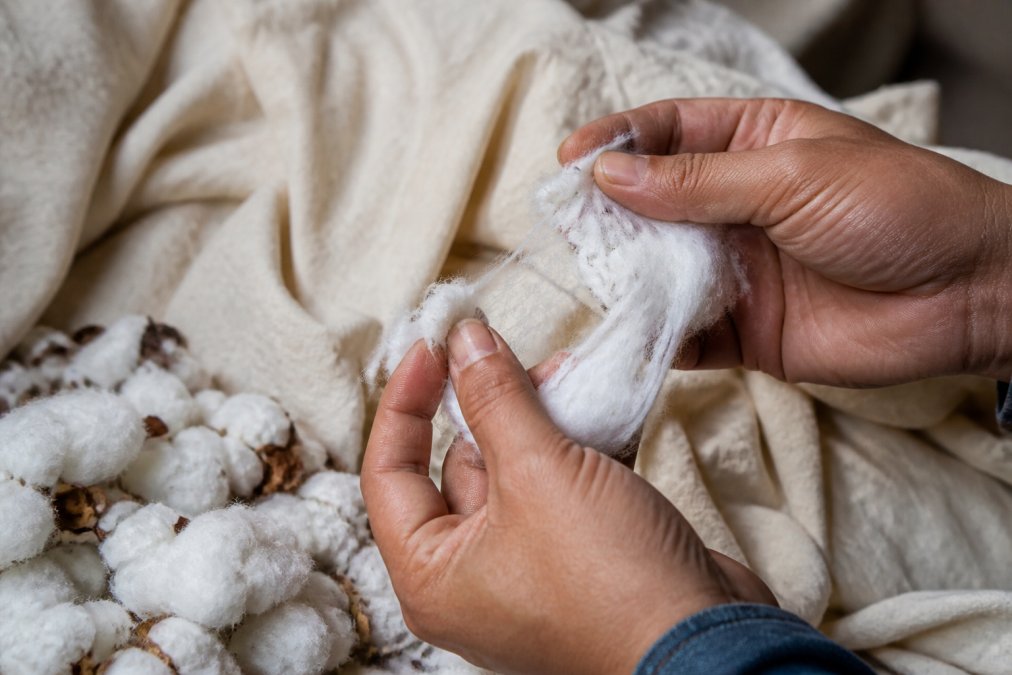
Growing premium cotton requires careful farming practices: selective harvesting of mature bolls rather than stripping entire fields, longer crop rotations, and precise soil and irrigation management. This labor-intensive approach yields fibers with superior strength and softness.
Premium supply chains are more transparent: producers track fiber origin, test for contaminants, and maintain detailed records. Budget manufacturers blend fibers from multiple sources without disclosure. When you buy premium fabric, you're buying accountability about where the material came from and how it was handled.
How to Identify High Quality Fabric
Recognizing quality fabric yourself means knowing what to look for beyond the price tag.
Thread count matters, but quality matters more. A 200-400 thread count using premium long-staple cotton outperforms 600-count fabric made from shorter fibers because thread thickness, strength, and consistency determine performance.
Fabric weight tells you about durability and longevity. Premium garments typically use heavyweight fabric (measured in ounces per square yard). Our Unisex Garment-Dyed T-shirt, for example, uses 6.1 oz/yd² heavyweight fabric made from 100% ring-spun US cotton. This weight provides structure, comfort, and resistance to wear. Lightweight budget fabrics often feel thin and start showing wear within months.

Hand feel is the tactile quality of fabric. Premium fabrics feel soft and smooth because fibers are uniform and well-processed. Budget fabrics often feel stiff or papery due to lower-quality fibers or harsher finishing.
Ring-spun versus open-end spinning makes a measurable difference. Ring-spun yarn (used in premium fabrics) twists fibers tightly together, creating stronger, smoother thread. Open-end spinning is faster and cheaper but produces looser, weaker yarn that pills more easily and loses color faster. When a manufacturer specifies ring-spun cotton, they're committing to a slower, more expensive production method.
The Cost of Textile Manufacturing and Production Scale
Production volume and equipment utilization create the core cost divide. Mass-production facilities process 500,000+ yards per day through aging equipment, reducing per-unit costs but introducing inconsistency in dye absorption, weave density, and shrinkage. Premium mills produce 10,000-50,000 yards per day with newer equipment, allowing quality monitoring at multiple checkpoints and frequent calibration.
Weaving technique complexity directly drives loom time and cost. Plain weave produces ~1,000 yards per day; twill ~600-700 yards; jacquard ~200-400 yards; sateen ~400-500 yards. A plain-weave operator manages 4-6 looms; a jacquard operator manages 1-2 looms. Premium fabrics using complex weaves carry 2-3x the loom labor cost per yard compared to budget plain-weave alternatives.
Loom maintenance and downtime differ significantly. Budget manufacturers accept higher downtime from aging machinery. Premium mills invest in preventive maintenance, spare parts, and technician staff to minimize unplanned downtime. A loom breaking down 4 hours daily loses 16% of output; premium mills budget for planned maintenance and backup looms to avoid this loss.
Labor standards and geographic location significantly impact manufacturing cost. Budget manufacturers locate in regions with minimal labor standards; workers earn $3-5/hour with minimal safety oversight. Premium manufacturers operate in countries with strict labor standards (Portugal, Japan, US), where workers earn $15-25+/hour with mandatory safety training and benefits. A premium tee carries $2-4 more in labor cost per unit, reflecting real wage and safety investment.
Yarn sourcing and preparation differs significantly. Budget manufacturers buy commodity yarn; premium manufacturers work with dedicated spinners for exact specifications (thickness, twist, alignment). Custom yarn preparation adds 15-30% to yarn cost but prevents tension problems, breakage, and uneven fabric that plague budget production.
After weaving, premium facilities employ trained inspectors to catch defects (broken threads, tension marks, pattern errors) before dyeing, preventing costly rework. Budget facilities skip this inspection, allowing defects to proceed to expensive dyeing stages. This inspection labor ($0.50-$1.50 per 100 yards) prevents larger losses downstream.
Finishing Processes and Treatments That Add Value
Raw woven fabric is just the beginning. Finishing transforms it into something wearable.
Dyeing is where premium fabrics diverge sharply from budget alternatives. Premium garment-dyed fabrics are dyed after construction, allowing custom color development and even dye penetration for superior color fastness and softer hand feel. Budget manufacturers use pre-dyed yarn or piece-dyed fabric, producing uneven color and weaker dye bonds that fade faster.
Soft-washing and garment-finishing add significant cost to premium fabrics. These processes use enzymes and controlled heat to relax the fabric structure, improving softness and hand feel. A garment-dyed piece might go through multiple wash and dry cycles to achieve the desired texture. Budget fabrics skip these steps, which is why they often feel stiff or scratchy initially.
Shrinkage control requires pre-shrinking fabric or garments before they reach customers. Premium manufacturers pre-shrink to ensure you get consistent sizing and don't experience surprise shrinkage in the wash. Budget manufacturers often skip this step, betting that customers will accept some shrinkage as normal. When you buy premium fabric, you're buying the assurance that the garment will fit the same way after 50 washes as it does on day one.
Finishing treatments for performance, stain resistance, wrinkle resistance, or colorfastness enhancement, add cost but extend garment life. These aren't luxuries; they're investments in longevity.
Natural vs Synthetic Fabric Durability and Longevity
The fiber type itself determines how long a garment will last.
Premium natural fibers like long-staple cotton improve with age. They soften with washing and wear, developing character while maintaining strength. A high-quality cotton garment can last 5-10 years of regular wear if cared for properly. The fabric becomes more comfortable over time, not less.
Unisex Garment-Dyed T-shirt-Dolphins →
Synthetic fabrics (polyester, nylon, acrylic) are cheaper to produce and often marketed as "durable." But durability and longevity aren't the same thing. Synthetics resist wrinkles and dry quickly, but they pill more easily, hold odors, and degrade faster under UV exposure. A synthetic garment might survive 2-3 years before pilling becomes noticeable and the fabric loses its original appearance.
The cost-per-wear calculation changes this equation. A premium cotton tee that costs more upfront but lasts twice as long actually costs less per wear than a budget synthetic tee you replace more frequently. If a premium garment lasts 100 washes and a budget garment lasts 30 washes, the premium option is delivering better value despite the higher initial price.
Natural fibers also age more gracefully. They don't accumulate static, they breathe better, and they feel more comfortable against skin over extended wear. These qualities are hard to quantify but real to experience.
Quality Control, Defect Rates, and Accountability
Premium manufacturers invest heavily in quality control systems that budget producers skip.
At every stage of production, fiber inspection, yarn spinning, weaving, dyeing, cutting, sewing, premium fabrics are tested. Defects are caught early and corrected. This requires trained inspectors, testing equipment, and time. When a defect is found, the fabric is either reworked or discarded. Budget manufacturers often skip these checkpoints to save time and money, accepting higher defect rates as normal.
The defect rate itself is a cost factor. A premium manufacturer might accept a 1-2% defect rate and rework or discard that fabric. A budget manufacturer might accept a 5-10% defect rate and still sell it. From the manufacturer's perspective, this saves money. From the customer's perspective, it means higher odds of receiving a garment with loose seams, uneven dyeing, or other quality issues.
Accountability systems also differ. Premium manufacturers often offer warranties or guarantees on their products. Our Comfort Colors garment-dyed tees reflect confidence in the product's durability. Budget manufacturers rarely offer such guarantees because they can't reliably stand behind their products.
The Hidden Costs of Fabric Retail and Supply Chain Complexity
The supply chain itself adds hidden costs that aren't obvious when you're comparing price tags, and most customers never see the overhead that justifies premium retail pricing.
Supply chain intermediaries and documentation create cost layers. Premium fabrics move through more complex supply chains with more intermediaries. A premium cotton tee might travel from a farm to a specialty spinner, then to a dyer, then to a manufacturer, then to a distributor, then to a retailer. Each step adds documentation, quality checks, and logistics costs. Budget fabrics often consolidate these steps, with vertically integrated manufacturers handling spinning, dyeing, and production in-house to reduce costs. However, this consolidation trades flexibility for efficiency: a vertically integrated budget manufacturer can't easily switch to a different dye supplier or adjust yarn specifications without disrupting their entire operation. Premium supply chains, though longer, allow for quality optimization at each stage. A premium dyer can be selected specifically for color fastness; a premium spinner can be chosen for fiber consistency. This modularity costs more in logistics but results in better final products.
Inventory management and small-batch retail overhead represent a significant but invisible cost burden. Premium retailers like Light and Salt Boutique maintain smaller, more curated inventories because we prioritize quality over volume. This operational choice carries real costs.
Bulk discount negotiation power heavily favors large retailers. Budget retailers buy in massive volumes, often 10,000+ units per SKU (size/color combination), which gives them significant negotiating power with manufacturers. A manufacturer might offer a 40% discount for a 10,000-unit order but only a 20% discount for a 500-unit order. Premium retailers, moving lower volumes, can't access the same bulk discounts. This isn't unfair pricing; it's a reflection of the manufacturer's own economies of scale. Producing 10,000 identical tees is far more efficient than producing 500 tees in 8 colors and 6 sizes.
Retail markup reflects different business models, not greed. Budget retailers operate on thin margins (20-30% markup) because they rely on high volume. If a budget retailer buys a tee for $6 wholesale and sells it for $12.99, the 116% markup seems high, but across 100,000 units per year with high overhead, the actual profit per unit is modest. Premium retailers operate on higher margins (50-100%+) because they move lower volumes and invest more in customer service, curation, and education. A premium retailer buying a tee for $18 wholesale and selling it for $33.99 has a 89% markup, which sounds lower but reflects the reality that they're selling 5,000 units per year instead of 100,000. The per-unit profit is often similar; the business model is simply different.
Supply chain transparency and traceability also add cost. Premium retailers often know exactly where their fabric came from, who manufactured it, and under what conditions. This requires supplier audits, documentation systems, and sometimes third-party certifications (Fair Trade, GOTS, etc.). Budget retailers rarely maintain this level of transparency because it's expensive and doesn't affect their price-sensitive customer base. A Fair Trade certification, for example, requires annual audits and compliance documentation that might cost $5,000-$15,000 per supplier per year. For a small premium retailer, this cost is significant and gets passed to customers. For a massive budget retailer, it's negligible per unit, but they don't pursue it because their customers don't demand it.
Logistics and shipping costs also differ by scale. A premium retailer shipping 50 orders per day to individual customers pays full retail shipping rates. A budget retailer shipping 5,000 orders per day negotiates volume discounts with carriers. The premium retailer might pay $6-8 per shipment; the budget retailer might pay $2-3. This cost difference is often absorbed by the retailer (premium retailers often offer free shipping as a service), which further increases their per-unit cost structure.
When you shop at a premium retailer, you're not just paying for the fabric, you're paying for the overhead of doing business differently: smaller batches, higher quality standards, better customer service, supply chain transparency, and the assumption that you want to keep the garment for years, not months. These costs are real, measurable, and built into the final price.
Cost Per Wear: Why Premium Fabrics Deliver Real Value
The most honest way to evaluate fabric cost is to calculate cost per wear.
A premium tee that costs $33.99 can offer a lower cost per wear over time compared to a budget tee that costs $12.99, even though it costs more upfront. The premium option can be cheaper over time, even though it costs more upfront.
This calculation becomes even more favorable for premium fabrics when you factor in replacement costs. Buying one $33.99 premium tee that lasts longer can cost less total and eliminates the hassle of frequent replacement.
The intangible benefits also matter. Premium fabrics look better longer. Colors stay vibrant. Fit remains consistent through repeated washing. The garment feels better against your skin. These qualities aren't luxuries, they're the difference between clothing you enjoy wearing and clothing you tolerate.
When you shop at Light and Salt Boutique, you're investing in pieces designed to be part of your routine for years, not months. Our Unisex Garment-Dyed T-shirts use heavyweight ring-spun cotton specifically because we know our customers want apparel that lasts and feels great. The higher initial cost reflects our commitment to durability and quality.

Premium fabrics cost more because they're made differently, at smaller scales, with better materials, and with accountability systems that protect your investment. Understanding these factors helps you make smarter purchasing decisions and recognize real value when you see it. At Light and Salt Boutique, we prioritize quality because we know that vibrant, feel-good apparel that truly lasts is worth the investment. Shop our collection of premium garment-dyed tees and discover the difference quality makes.
Frequently Asked Questions
Why do premium fabrics cost more than basic alternatives?
Premium fabrics cost more because they use higher-quality raw materials, employ stricter quality control, and involve more sophisticated finishing processes. Superior fiber quality, like long-staple cotton or high-grade synthetic blends, costs significantly more at the source. Additionally, smaller production runs and boutique manufacturing standards require more labor oversight and precision than mass production. These factors compound through the supply chain, resulting in higher costs that reflect genuine durability and performance differences.
How do I identify high quality fabric when shopping?
Look for thread count (higher is better for woven fabrics), fabric weight (measured in ounces per yard, heavier generally means more durable), and fiber composition. Check care labels for ring-spun cotton or long-staple varieties, which are superior to short-staple alternatives. Examine seams for double-needle stitching, inspect hems for even finishing, and feel the hand of the fabric, premium textiles have a soft, consistent texture without pilling. Ask about dyeing techniques and whether the fabric is pre-shrunk, as these indicate quality control investment.
What's the real difference between natural and synthetic fabric durability?
Natural fibers like cotton and linen are breathable and comfortable but can fade, shrink, and weaken over time without proper care. Synthetic fabrics like polyester resist fading and shrinkage better, but lower-quality synthetics pill easily and feel less comfortable against skin. Premium natural fibers, however, often outlast cheap synthetics because they're manufactured with better staple length and tighter weaving. The durability advantage goes to whichever category is produced at higher quality standards, premium cotton outlasts budget polyester, but premium polyester blends can match or exceed premium natural fibers in longevity.
Does paying more for premium fabrics actually save money in the long run?
Yes, when measured by cost per wear. A $33.99 premium garment made from 100% ring-spun cotton with double-needle stitching and proper finishing can offer a lower cost per wear over time. Premium fabrics resist fading, pilling, and shrinkage longer, meaning colors stay vibrant and fit remains consistent through more wash cycles. Over a year or two, the investment in quality apparel typically costs less per wear than replacing cheaper items frequently.