

Table of Contents
- The Real Economics of Boutique Apparel
- Wholesale vs. Retail Pricing Models
- Boutique Clothing Quality vs. Fast Fashion
- Average Markup on Boutique Clothing Explained
- Hidden Costs Behind Small-Batch Production
- Benefits of Shopping at Independent Boutiques
- The Value of Personalized Customer Experience
- Frequently Asked Questions
Last Updated: September 21, 2026
The Real Economics of Boutique Apparel
When you see a boutique price tag, you're paying for a fundamentally different business model than mass-market retail. Understanding why boutique apparel costs more requires looking at the economics that drive independent shops.
This guide breaks down the real economics behind boutique pricing, showing where your money goes when you shop independent.
Wholesale vs. Retail Pricing Models
Mass retailers operate on volume: a major retailer might order 10,000 units of a single style, allowing manufacturers to spread production costs across massive quantities and drive unit costs down dramatically.
Boutiques order 50-200 units of a style, meaning manufacturers cannot discount as aggressively. The per-unit wholesale cost is 40-60% higher than what major retailers negotiate for the same product.
Boutiques often source from different suppliers, manufacturers focused on smaller production runs, sustainable practices, or specialized craftsmanship, that major retailers avoid. These suppliers command premium wholesale prices because they operate at smaller scale and higher quality standards.
Boutique Clothing Quality vs. Fast Fashion
Fast fashion optimizes for cost and speed, using synthetic blends, thinner fabrics, and construction shortcuts. Garments are designed to last one or two seasons, not years.
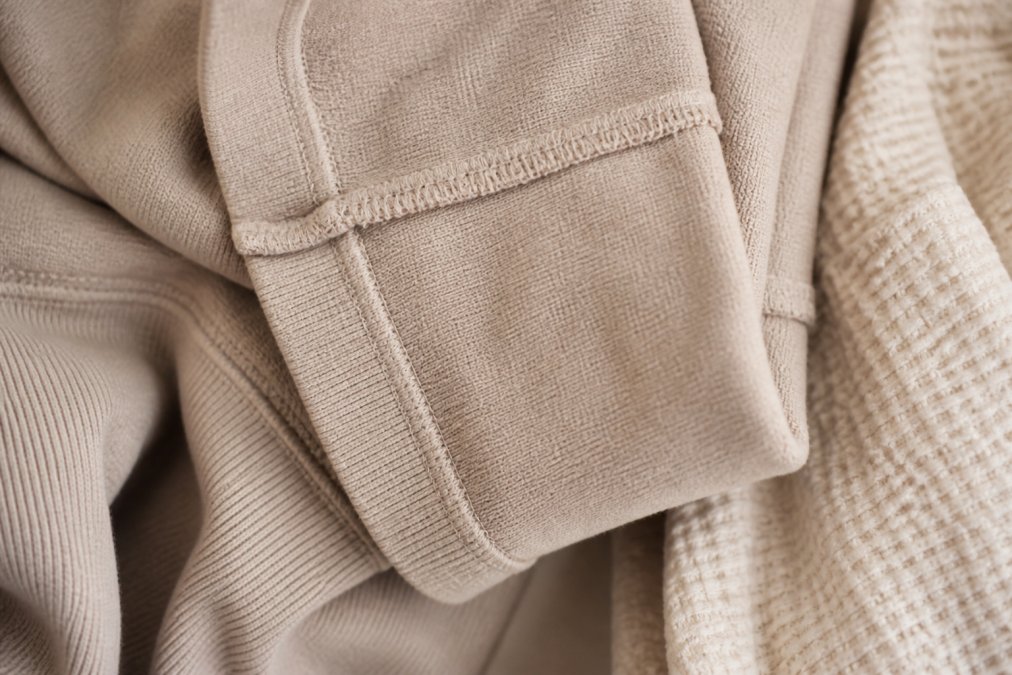
Boutiques source better-quality fabrics, natural fibers, heavier weights, superior finishes, with reinforced stitching, quality thread, and crafted details like button placement and hem finishing.
Quality fabrics and construction cost more: 100% cotton costs 20-30% more than cotton-polyester blends, and reinforced seams, linings, and finished hems add labor time. The wholesale cost difference is often 50% higher than fast-fashion equivalents.
A well-constructed boutique piece lasts through dozens of washes with vibrant prints and intact seams; fast-fashion pieces fade and pill. On a cost-per-wear basis, the boutique piece often becomes cheaper, though the quality difference is reflected in the upfront price.
Average Markup on Boutique Clothing Explained
Fast fashion retailers typically mark up inventory 2.5 to 3 times wholesale cost (150-200% markup). A $10 wholesale shirt retails for $25-30.
Boutique markups appear higher in percentage terms because they pay more upfront for inventory. A boutique marking up 2 to 2.5 times wholesale cost sounds similar to mass retail, but the wholesale cost was higher to begin with. The difference is not in markup percentage but in what that markup must cover.
A boutique's margin is often lower than a major retailer's despite higher markup percentages. Large retailers operate on thin margins with massive volume; boutiques need adequate margin to cover rent, staff, utilities, insurance, and unsold inventory risk. The markup reflects the cost of staying open, not just profit.
Ethical sourcing and sustainability practices add another layer to boutique pricing. When boutiques source from manufacturers paying fair wages and maintaining safe conditions, those manufacturers charge premium wholesale prices, a wholesale cost issue, not a markup issue.
A manufacturer paying living wages, providing benefits, and using sustainable materials costs more to operate than a fast-fashion supplier cutting corners. A boutique sourcing from fair-trade or certified sustainable manufacturers might pay 30-50% more per unit than mass retailers. This is a sourcing choice with real cost, not a markup choice.
Many boutique owners make this choice deliberately. They believe that apparel should be made by people earning fair wages in safe conditions, using materials that don't poison waterways or exploit agricultural workers. That belief system means accepting higher wholesale costs. When a boutique marks up a garment made under fair-labor conditions, the customer is not paying for excessive profit; they're paying for the actual cost of ethical production.
This distinction matters because it reframes why boutique apparel costs more than retail. Part of the price difference is not about boutique inefficiency or greed; it's about a different set of values embedded in the supply chain. A boutique charging $85 for a fair-trade cotton shirt is not overcharging compared to a mass retailer charging $35 for a shirt made in a factory with questionable labor practices. The wholesale cost difference is real, the markup is justified, and the customer is paying for a product made under conditions that reflect human dignity.
For boutiques that do source ethically, this cost structure is often not fully transparent to customers. Many boutiques don't explicitly explain that their higher prices reflect fair wages, sustainable practices, and supply chain integrity. Making that connection visible, explaining that a $15 wholesale cost difference reflects fair labor practices, helps customers understand that they're not overpaying; they're paying the true cost of responsible production. A mass retailer's lower price is only possible because someone, somewhere in the supply chain, is absorbing the cost through lower wages, unsafe conditions, or environmental damage.
Hidden Costs Behind Small-Batch Production
Small-batch production creates costs that don't show up in the sticker price but absolutely affect why boutique apparel costs more than retail. When a manufacturer produces 10,000 units, the setup cost (preparing machinery, creating patterns, testing production) is spread across 10,000 garments. When a boutique sources 100 units, that same setup cost is spread across 100 units. This manufacturing reality alone can add 10-20% to the per-unit cost.
But the most significant hidden cost is inventory risk and deadstock burden. A major retailer with 500 locations distributes inventory across a network. If one style doesn't sell at one location, the loss is absorbed across the entire system. A boutique carries all the risk of its inventory decisions concentrated in a single location. If a boutique orders 150 units of a style and sells 80, it's holding 70 units of deadstock, unsold inventory that ties up cash, occupies valuable floor and storage space, and eventually gets marked down 30-50% or donated, representing a direct loss to the business.
This inventory risk fundamentally changes how boutiques must price. A mass retailer can afford to stock speculatively because volume and distribution spread the risk. A boutique cannot. To protect against deadstock losses, boutiques must maintain higher margins on items that do sell. If a boutique expects to sell 60% of its inventory at full price and mark down 40% to clear deadstock, it must price the 60% that sells higher to offset the 40% that doesn't. This is not greed; it's financial necessity.
The math is stark. If a boutique buys 150 units at $30 wholesale and marks them up 2.2 times to $66 retail, it expects revenue of $9,900. But if only 100 units sell at full price and 50 units are marked down to $40 (a typical clearance discount), actual revenue is $6,000, a $3,900 shortfall. To break even on that style, the boutique would need to have priced it at $99 retail, a markup of 3.3 times. That's why boutique markups appear high: they're compensating for inventory risk that mass retailers don't face.
Shipping and logistics for small orders also cost more per unit. A manufacturer shipping 10,000 units to a distribution center pays a fraction per unit of what a boutique pays to receive 150 units. A boutique might pay $8-12 per unit in shipping; a major retailer pays $0.50-1.50 per unit. Supply chain efficiency favors volume, and boutiques operate at a structural disadvantage. These logistics costs are built into the wholesale price boutiques pay, making the acquisition cost higher before any retail markup is applied.
Small-batch production also means boutiques cannot negotiate payment terms as favorably as large retailers. A major retailer might receive 60-90 days to pay for inventory; a boutique often receives 30 days or must pay upfront. This difference in cash flow timing means boutiques carry higher working capital costs. Money that could be used elsewhere is tied up in inventory longer, and if a boutique needs to finance that inventory through a line of credit, the interest cost gets factored into pricing.
Finally, the curation itself, the buyer's work to select inventory, represents a cost that mass retailers don't incur at the same scale. A boutique owner or buyer spends hours researching suppliers, requesting samples, evaluating quality, and making decisions about what to stock.
Benefits of Shopping at Independent Boutiques
Despite the higher prices, boutique shopping delivers value that mass retail cannot match. The most obvious: curation. A boutique buyer has selected every item with intention. You're not sorting through 500 nearly-identical options; you're choosing from a curated collection where each piece was chosen because the owner believed in it.
The Value of Personalized Customer Experience
The relationship between boutique staff and customers is fundamentally different from mass retail. Boutique staff typically have deep product knowledge. They understand fabrics, construction, fit, and the story behind pieces. They can explain why something costs what it costs and help you understand the value.
Frequently Asked Questions
Why is boutique apparel so much more expensive than what I'd pay at big retailers?
Boutique apparel costs more because of smaller production runs, higher-quality materials, and lower economies of scale. Independent boutiques source materials directly, invest in better craftsmanship, and carry overhead costs spread across fewer items. Unlike mass retailers buying millions of units, boutiques order in smaller quantities, which means suppliers charge higher per-unit costs. Additionally, boutique owners invest heavily in curated selection and personalized customer experience, which adds value but increases operating costs.
What is the average markup on boutique clothing compared to retail?
Boutique clothing typically carries a markup that covers cost of goods sold, overhead expenses (rent, utilities, staff), inventory risk, and profit. Retail chains achieve lower markups because they buy in massive volume, reducing their per-unit costs significantly. Boutiques must mark up higher to remain profitable while maintaining quality and providing personalized service. The markup isn't pure profit, much of it covers the real expenses of running an independent operation.
How does boutique clothing quality actually compare to fast fashion?
Boutique clothing typically uses better materials, superior stitching, and more durable construction than fast fashion. Boutiques often source from manufacturers who prioritize quality over speed, resulting in garments that hold up better through multiple washes and wears. Fast fashion prioritizes low cost and quick turnover, which means thinner fabrics, weaker seams, and prints that fade faster. Boutique pieces are designed to last longer, which means better value over time despite the higher upfront price. Quality also extends to design, boutiques often offer unique, timeless styles rather than trend-chasing basics.
What are the real benefits of shopping at independent boutiques instead of big retailers?
Independent boutiques offer curated collections tailored to specific audiences, personalized styling advice, and direct access to owners who stand behind their products. You're supporting small businesses and local economies rather than large corporations. Boutiques typically stock exclusive designs you won't find elsewhere, reducing the chance of wearing the same outfit as someone else. You also get genuine relationships with the people selling to you. These intangible benefits, community, uniqueness, personal touch, justify the higher price point for many shoppers.