

Table of Contents
- Understanding Whimsical Design Fundamentals
- How to Mix Patterns in Home Decor Without Overwhelming Your Space
- Layering Textures and Textiles for Visual Interest
- Incorporating Bold and Pastel Colors Into Your Palette
- Adding Vintage-Inspired and Quirky Lighting Fixtures
- Styling Shelves With Personality and Purpose
- Best Places to Buy Uplifting Home Decor
- Budget-Friendly DIY Whimsy and Maintenance Tips
- Styling Whimsical Accessories in Small Spaces
- Frequently Asked Questions
Last Updated: September 25, 2026
Understanding Whimsical Design Fundamentals
Whimsical design celebrates personality, playfulness, and joy through style whimsical home accessories, color, pattern, texture, and unexpected touches that spark delight.
The core is mixing unexpected elements intentionally: bold hues with pastels, vintage with modern, animal prints with florals. The magic happens when these feel curated, not chaotic.
Whimsical design isn't about following rules, it's about creating a space that feels authentically yours through colors, textures, and quirky touches that spark joy.
Style whimsical home accessories as storytellers: a vintage lamp, patterned pillow, or statement doormat aren't just functional, they're expressions of optimism that transform rooms into celebrations of life.
How to Mix Patterns in Home Decor Without Overwhelming Your Space
Pattern mixing requires intention: choose patterns that share a common color or visual thread.
Select a dominant pattern for the largest visual area (throw pillow or wallpaper), then add a secondary pattern sharing at least one color. This creates harmony despite design differences.
Add a third pattern in smaller doses on accent pieces. The 60-30-10 rule works: 60% dominant, 30% secondary, 10% accent.
Avoid patterns competing equally or lacking color overlap. Let one pattern lead while others support it.
| Pattern Type | Best For | Example |
|---|---|---|
| Geometric | Creating structure | Stripes, checks, abstract shapes |
| Floral | Softness and nature | Botanical prints, garden scenes |
| Animal print | Bold statements | Leopard, gingham, quirky creatures |
| Vintage-inspired | Nostalgic charm | Retro florals, cottage motifs |
Layering Textures and Textiles for Visual Interest
Layering textures creates depth and intentionality, inviting touch and exploration.
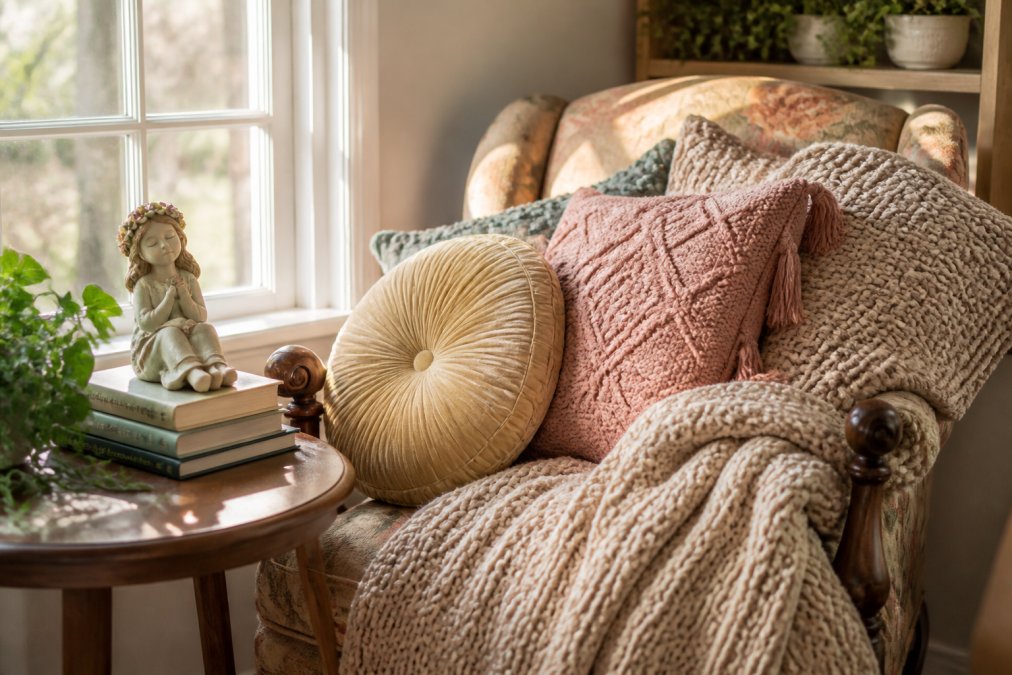
Layer over base textures (sofa, curtains, flooring): knit blankets over leather, linen pillows on velvet, soft textures with hard ones like wood and metal.
Textiles are your easiest layering tool. A chair becomes focal when layered with woven throws, patterned pillows, and fringed cushions.
The Halloween Pumpkin Girl Decorative Pillowcase from Light and Salt Boutique exemplifies texture-rich design with its spun polyester cover and double-sided print. Layer it with other pillows in different fabrics to build depth.

Natural textures, woven baskets, wooden frames, plants, add tactile richness, especially vintage-inspired pieces.
Incorporating Bold and Pastel Colors Into Your Palette
Balance bold hues with softer pastels so neither overwhelms.
Choose one bold anchor color (jewel tone, primary, mustard, or teal) for your largest statement piece, accent wall, furniture, or accessory collection.
Pastels provide breathing room, softening the overall effect and preventing chaos.
Use the 70-20-10 rule: 70% neutral/soft, 20% bold, 10% accent colors.
Use bold colors in swappable accessories (pillows, rugs, door frames). Pastels anchor larger pieces like walls or furniture.
Test colors in your actual lighting: natural light makes bold hues pop; warm light deepens jewel tones; cool light brightens pastels.
Adding Vintage-Inspired and Quirky Lighting Fixtures
Lighting defines whimsical aesthetics. The right fixtures become statement pieces.
Vintage-inspired lighting (Edison bulbs, brass lamps, retro pendants) adds character, especially in reading nooks or over kitchen islands.
Quirky fixtures shaped like animals, flowers, or unexpected objects (mushroom lamps, hot air balloon pendants, branch sconces) inject playfulness.
Balance statement-making with practicality: provide adequate light while looking like art. Dimmer switches adjust mood from bright task lighting to soft evening relaxation.
Layer light sources: statement fixture plus accent lights and candles for depth and function.
Styling Shelves With Personality and Purpose
Shelves are your canvas for displaying whimsical accessories. The best styled shelves balance visual interest with breathing room.
Choose harmonizing colors: soft pastels with one bold jewel-toned book, or earth tones with coral pops, feels curated.
Vary heights and shapes: stack books both ways, mix photos with objects, include one statement piece per shelf to anchor.
Include functional items alongside decorative ones. A beautiful mug, a vintage tin, a stack of meaningful books, these tell a story while keeping the shelf practical. The best shelves look lived-in, not museum-like.
Leave negative space. A shelf packed solid feels cluttered. Leave gaps between groupings so your eye can rest. This actually makes the displayed items stand out more.
Group items in odd numbers. Three books, five decorative objects, seven candles, odd groupings feel more natural and intentional than even numbers.
Best Places to Buy Uplifting Home Decor
Finding the right whimsical accessories means knowing where to look. The best places to buy uplifting home decor combine quality, personality, and values alignment.
Light and Salt Boutique specializes in vibrant, feel-good home accessories designed to spark joy. Their collection includes whimsical doormats, decorative pillowcases, and accessories that celebrate personality. Items like the "Hey Boo" doormat and the Cute Fall Wiener Dog Welcome Mat bring immediate charm to entryways while the Halloween Gnome Doormat adds seasonal personality.

Look for retailers that curate collections rather than mass-producing everything. Boutique shops often feature unique, vintage-inspired pieces you won't find in chain stores. Support small makers and artisans when possible, their pieces carry genuine personality.
Online marketplaces work well for browsing specific styles. Search for terms like "vintage-inspired lighting," "whimsical throw pillows," or "eclectic home decor" to find niche sellers. Read reviews carefully to assess quality and color accuracy.
Thrift stores and antique shops remain treasure troves for authentic vintage pieces. You'll find genuine vintage lighting, unique textiles, and one-of-a-kind accessories that add irreplaceable character to whimsical spaces.
Home goods stores increasingly stock whimsical items. Department stores often have seasonal collections featuring bold colors and playful designs. These work well for budget-conscious decorating.
Budget-Friendly DIY Whimsy and Maintenance Tips
Creating whimsical style on a budget requires strategic upcycling and smart sourcing. The most cost-effective approach combines thrifted base pieces with targeted paint and textile updates, often reducing costs by 60-75% compared to buying new statement pieces.
Upcycling Furniture Into Whimsical Focal Points
Thrifted furniture forms the foundation of budget whimsy. A plain wooden dresser becomes a statement piece with a bold paint color on the drawers and new hardware. Cost: $15-30 for paint and hardware versus $300+ for a new whimsical dresser. An old lamp base pairs with a patterned fabric shade ($8-15 in fabric) to create a quirky lighting fixture. Wooden chairs gain personality with reupholstered seats in bold or patterned fabric ($20-40 per chair in fabric and basic supplies).
The key is identifying pieces with good bones. Solid wood furniture, vintage metal frames, and intact ceramics are ideal candidates. Avoid pieces with structural damage, as repairs often exceed the cost of the item itself.
Paint as Your Cheapest Transformation Tool
Paint delivers maximum impact for minimal investment. A gallon of quality interior paint costs $25-40 and covers approximately 400 square feet. An accent wall in a 12×14 bedroom costs under $15 in paint alone. Unexpected ceiling colors, soft pastels or jewel tones, transform a room's entire feel for the price of one gallon. Door frames, baseboards, or interior closet doors painted in bold colors create focal points without major renovation costs.
Halloween Pumpkin Girl Decorative →
Test paint colors in your actual space before committing. Natural light, artificial light, and wall reflections all shift how colors appear. Buy sample pints ($5-8 each) and paint large swatches on cardboard, moving them around the room throughout the day.
Creating Artwork and Wall Displays on a Budget
Frame inexpensive materials for instant gallery walls. Botanical prints from free online sources, vintage patterns from thrift-store books, or colorful pages from old calendars cost nothing to $2 per frame when sourced from discount retailers or thrift stores. Arrange 5-7 frames in a gallery wall layout for under $30 total. Fabric scraps or vintage wallpaper samples mounted in simple frames ($1-3 each) create texture and color without artwork costs.
Create your own canvas art using acrylic paint ($3-8 per bottle) on canvas boards ($2-5 each). Simple geometric patterns, color blocking, or abstract designs require no artistic skill and cost under $20 for a gallery-ready piece.
The Clutter Problem: Styling Whimsy Without Visual Chaos
Whimsical decor's biggest maintenance challenge is preventing maximalist spaces from feeling cluttered. The difference between "curated" and "chaotic" lies in intentional negative space and regular editing.
Implement a one-in-one-out rule for accessories. When you add a new whimsical piece, remove something else. This prevents accumulation while maintaining the playful energy. Rotate seasonal accessories quarterly, storing off-season items in labeled containers. This keeps your active decor fresh while preventing the visual weight of year-round maximalism.
Group similar items in odd numbers (3, 5, or 7) rather than scattering them throughout the room. Three ceramic figurines on a shelf feel intentional; the same pieces spread across multiple surfaces feel scattered. Clustering creates visual rhythm and makes spaces feel designed rather than accumulated.
Designate specific display zones. A single shelf, a corner of a bookcase, or a small table becomes your whimsy hub. This concentrates personality in defined areas, leaving other spaces calm and breathing room for the eye to rest.
Protecting Your Investment Through Smart Maintenance
Whimsical accessories require regular but gentle care to maintain their impact. Dust decorative items weekly using soft microfiber cloths; dust accumulation dulls colors and makes spaces feel dingy rather than joyful.
Protect textiles from direct sunlight, which fades bold colors and pastels within months. Rotate throw pillows and blankets seasonally, and use UV-blocking curtains if pieces sit near windows. Vintage-inspired textiles are particularly vulnerable; store them in acid-free tissue in sealed containers to prevent yellowing and pest damage.
Spot-clean throw pillows and doormats as needed rather than waiting for full washing, which can damage delicate fabrics or cause color bleeding. For machine-washable pieces, use cold water and gentle cycles. Air-dry to prevent shrinkage.
Clean decorative ceramics, figurines, and vintage finds with a soft, slightly damp cloth. Avoid harsh chemicals that can damage finishes or fade hand-painted details. For valuable vintage pieces, consider professional cleaning.
Styling Whimsical Accessories in Small Spaces
Small spaces demand strategic whimsy, but the challenge intensifies for renters who cannot paint walls, install wallpaper, or make permanent changes. The solution lies in creating personality through removable, portable, and layered accessories that feel intentional without requiring landlord approval.
Renter-Friendly Whimsy: Temporary Solutions With Maximum Impact
Renters can achieve full whimsical design without permanent modifications. Peel-and-stick wallpaper ($15-40 per roll) delivers pattern and color on walls, ceilings, or even furniture without damage. Apply to a single accent wall or the interior of a bookcase for dramatic effect. Removable wall decals ($10-30 per set) add playful imagery, animals, florals, or abstract shapes, that peel away cleanly when you move.
Fabric wall hangings replace paint-free accent walls. A large tapestry, vintage fabric, or bold textile pinned or hung with removable adhesive strips creates a focal point without wall damage. Layer multiple fabrics in complementary colors for depth. This approach costs $20-60 and takes minutes to install or remove.
Removable contact paper ($8-15 per roll) transforms furniture temporarily. Cover a plain dresser, bookshelf, or side table in bold patterns or colors, then peel it away when your lease ends. This works especially well for rental furniture that feels bland.
Vertical Styling for Maximum Personality in Minimal Square Footage
In small spaces, every vertical inch matters. Floor-to-ceiling shelving (or leaning shelves if permanent installation isn't allowed) maximizes display space without consuming floor area. Tall, narrow bookcases ($40-100) fit into corners and create visual height that makes rooms feel larger.
Wall-mounted storage and display systems ($30-80) hold whimsical accessories without taking up surface space. Floating shelves, pegboards, or wire grid systems let you arrange and rearrange pieces easily. Pegboards are especially renter-friendly; they mount with removable adhesive strips and hold lightweight accessories like small plants, framed prints, or decorative objects.
Hanging textiles, macramé wall hangings, fabric panels, or vintage scarves, add color and pattern vertically. Hang them from removable hooks or tension rods that require no wall damage. A single large hanging textile becomes a focal point; layer smaller pieces for more complex visual interest.
Choosing One Bold Color to Anchor Small Spaces
Multiple competing bold colors overwhelm small rooms. Instead, select one jewel tone, bright primary, or unexpected hue (mustard, teal, coral) as your anchor color. This color appears in your largest statement piece, a rug, a major textile, or a collection of coordinated accessories, and repeats in smaller doses throughout the room.
Pastels and neutrals provide breathing room, preventing the space from feeling chaotic. A small room with one bold color, soft pastels, and white or neutral walls feels intentional and calm. The same room with three competing bold colors feels cluttered and visually exhausting.
Use removable elements to test color commitment. A bold throw blanket, patterned curtains, or a large area rug lets you experiment with color without permanent investment. If you love it after a month, commit to larger pieces. If it feels overwhelming, swap it out.
Mirrors and Lighting: Multiplying Whimsy Without Space
Mirrors serve dual purposes in small whimsical spaces. A decorative mirror reflects light and color, making bold hues feel less heavy and pastels glow brighter. Vintage-framed mirrors ($20-60) add style while expanding perceived space. Position a mirror opposite a window to bounce natural light and amplify the brightness of your color palette.
Lighting becomes even more critical in small spaces. A single statement fixture, a quirky pendant, a vintage-inspired wall sconce, or an ornate table lamp, creates drama without consuming floor or shelf space. Dimmer switches ($15-30) let you adjust mood throughout the day, bright for task work and softer for evening relaxation. Layered lighting (overhead fixture, accent light, and candles) adds depth without requiring additional furniture.
Multi-Functional Pieces That Earn Their Space
Every piece in a small space must justify its footprint. An ottoman with hidden storage ($60-150) holds throws, pillows, or seasonal decor while providing seating and a surface for displaying accessories. A side table that doubles as a plant stand ($40-80) combines function with whimsy. A decorative ladder ($30-70) leans against a wall, holding blankets and displaying small accessories without taking up floor space.
Choose furniture with visual lightness. Glass or metal frames, open shelving, and furniture with legs (rather than solid bases) make small spaces feel less cramped. A whimsical side table with delicate legs feels less heavy than a solid wood piece, even if they're the same size.
Proportional Accessories for Small Rooms
Scale matters in compact spaces. Oversized statement pieces overwhelm small rooms; instead, choose several smaller pieces that together create personality. A collection of small ceramic figurines on a shelf, a grouping of framed prints in a gallery wall, or multiple small throw pillows layered on a sofa all deliver whimsy without visual bulk.
Keep accessories proportional to furniture. Small side tables pair with small lamps and compact decorative objects. A tiny bookshelf holds small books and figurines, not large statement pieces. This creates visual harmony and prevents the space from feeling cluttered.
Editing and Rotation: Keeping Small Spaces Fresh
Small spaces show clutter immediately. Implement a strict editing practice: if an accessory doesn't spark joy or serve a function, remove it. Rotate seasonal pieces quarterly, storing off-season items in under-bed containers or closet shelves. This keeps your active decor fresh and prevents visual overwhelm.
Group similar items rather than scattering them. Three throw pillows clustered on a sofa feel intentional; the same pillows spread across multiple chairs feel scattered. Five books stacked on a shelf look curated; the same books spread throughout the room feel disorganized.
Frequently Asked Questions
What is the 3-5-7 rule in decorating?
The 3-5-7 rule is a design principle that guides arrangement and visual balance. Group three small items, five medium pieces, or seven tiny accents together to create cohesion without clutter. When styling whimsical home accessories, this rule prevents overwhelming a space while maintaining personality. For example, arrange three throw pillows on a sofa, five framed prints on a shelf, or seven small figurines on a mantel. This approach works especially well in smaller spaces where maximalism can feel cramped.
How can I add whimsy to my home without making it look cluttered?
Balance is key to avoiding clutter while embracing whimsy. Use the 3-5-7 rule, mix patterns intentionally rather than randomly, and anchor whimsical pieces with neutral solid-colored furniture or walls. Create breathing room by leaving some wall and shelf space empty. Group similar items together instead of scattering them throughout a room. Invest in statement pieces like a vintage-inspired doormat or patterned throw pillow that draw attention, then keep surrounding decor more minimal. Rotate seasonal accessories to keep your space feeling fresh without permanent overcrowding.
What are some budget-friendly ways to incorporate whimsical decor?
DIY projects offer affordable whimsy without breaking your budget. Paint old picture frames in bold colors, create custom throw pillow covers from fabric remnants, or hand-draw designs on plain doormats. Thrift stores and online marketplaces often have vintage-inspired lighting fixtures and textiles at fraction of retail prices. Layer existing decor with inexpensive accessories like string lights or colorful scarves. Light and Salt Boutique offers whimsical doormats starting at $29.99 and decorative pillowcases at $20.99, making it easy to add personality without major investment. Focus spending on pieces you'll keep long-term, like quality textiles.
How do I choose the right whimsical pieces for a small room?
In small spaces, prioritize vertical styling and multi-functional pieces. Choose whimsical accessories that serve a purpose, like a decorative doormat that also traps dirt, or patterned throw pillows that add comfort and style. Opt for wall-mounted shelving with personality rather than floor-standing decor. Select a limited color palette of two to three bold hues plus neutrals to avoid visual chaos. Light-colored whimsical pieces like cream-toned pillowcases or pastel accessories feel less heavy in compact rooms. Avoid oversized statement pieces; instead, layer smaller whimsical items that create impact without consuming floor space.